
{ Julie Bowditch }
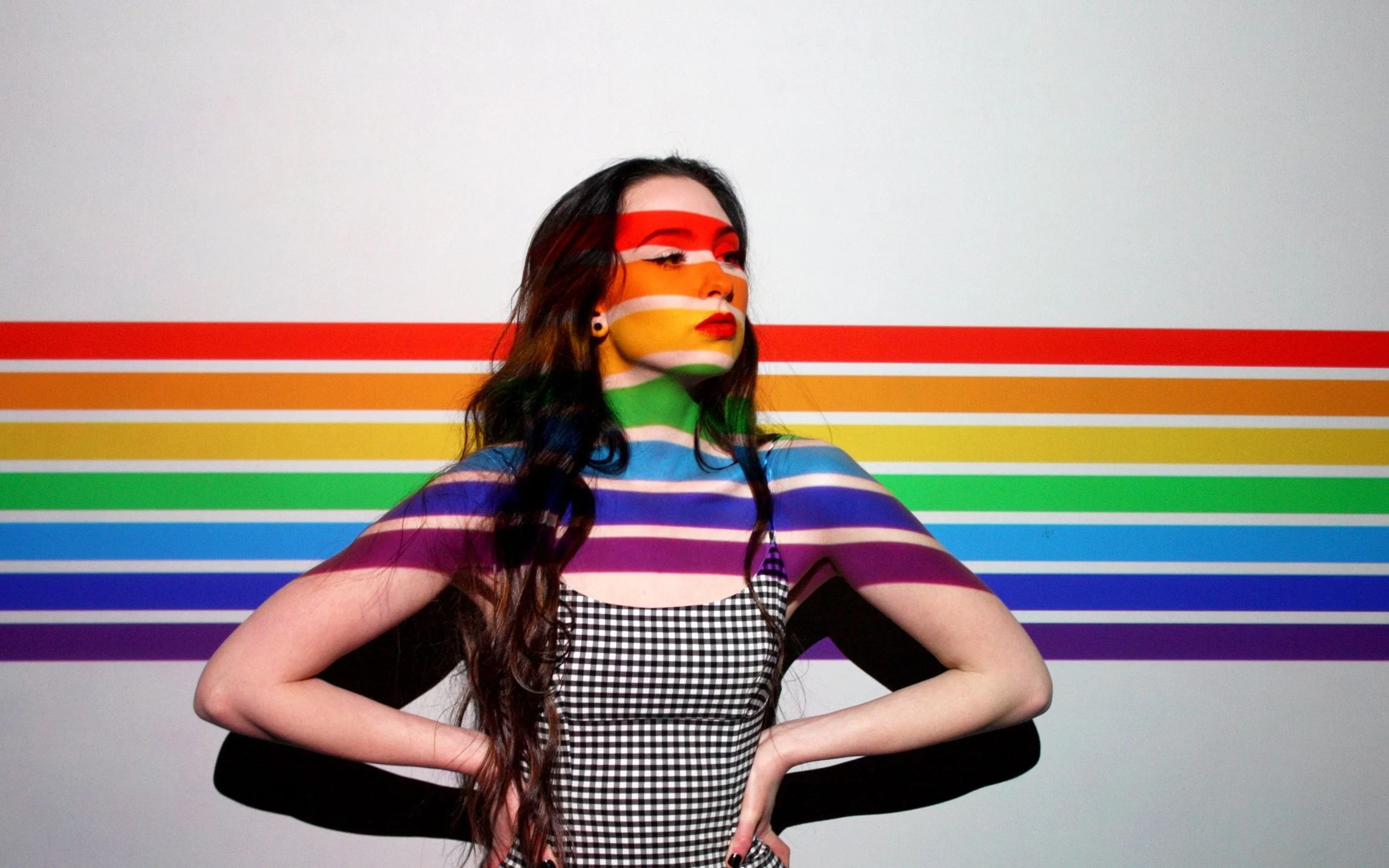
Well, this is awkward. After publishing three columns about moving beyond performative allyship and becoming a true accomplice to the LGBTQIA+ community, I have a confession to make:
I may have accompliced a little too hard and fallen right into the steaming hot alphabet soup.
For many years, I have shown up loudly and proudly for the queer community. I have celebrated Pride to the absolute max. My queer friends have jokingly referred to me as “gay adjacent” and an “honorary queer.” I have advocated, marched, written, spoken up, called people out and tried to use whatever access and privilege I have to make spaces safer and more equitable for members of the LGBTQIA+ community.
As it turns out, I was also showing up for my future self before I consciously knew it.
Over the last several years, and more intentionally in recent months, I have been on a deeply personal journey of acknowledging my attraction to women after exclusively dating men for my entire adult life. I am becoming increasingly comfortable with not needing to package it neatly into a label for anyone else. What I know: Naming myself as queer feels like home.
Getting here has been so many things: gradual, sudden, painful, healing, obviously complicated, often scary, occasionally hilarious and ultimately really beautiful.
I grew up in a deeply conservative and religious household. That environment undoubtedly shaped my thinking early on, including some internalized homophobia that, interestingly enough, I seemed to reserve exclusively for myself.
But there was another layer I had to untangle, too. I had spent a lifetime absorbing all the ways women are taught to understand our value in relation to men — particularly our desirability to them. Being attractive to men means something in our society. And somewhere in all of that conditioning, it became remarkably easy to confuse being desired with desire — and being wanted with being valuable.
Being chosen is not the same as choosing. Being desirable to someone is certainly not the same thing as desiring them, or being intimately connected to or fulfilled by them.
Those distinctions sound embarrassingly obvious in retrospect. They took me considerably longer to understand in my own life. Damn you, patriarchy!
At some point during this process, I came across a statement online that stopped me cold: Straight people generally don’t have a Google search history with various versions of “How would I know if I was gay?” I felt attacked.
Coming out later in life is a strange juxtaposition because, for me, it has somehow been both harder and easier. There is grief and shame in wondering what I missed. I lost years when I could have known myself more completely, loved more authentically or at least given myself permission to explore a part of me I had not yet learned how to acknowledge.
And yet, what an extraordinary privilege it has been to arrive here now. I came out after having decades to build confidence in who I am. I have independence. I have a life I love. And most significantly, I have spent years surrounding myself with an incredible network of people with whom I feel safe.
I did not have to wonder whether acknowledging my sexuality would cost me housing, financial support, my career, my closest friendships or my physical safety. That is privilege — enormous, staggering privilege.
Perhaps because of that, some of the most meaningful responses I have received have barely been reactions at all. No gasp. No interrogation. No dramatic reassessment of who I am. Just unadulterated love and support. “You are still my friend, sister, cousin, daughter. Nothing about this changes the person we already know.” Our dynamics, conversations and connections are exactly the same as before. What a core-deep relief!
My siblings have been fiercely supportive. Friends have wrapped me in love, encouragement — and an almost comical lack of surprise. Other conversations were more intimidating. My parents, for example, have been … ambiguous, which, given the prior context, we are going to chalk up as a win.
This journey has also affected people I care deeply about. Authenticity is freeing, but it is rarely painless. Sometimes becoming more honest with ourselves changes relationships, expectations and futures that involved other people. There has been gut-wrenching hurt alongside the healing. Both deserve to be acknowledged.
Everything and nothing has shifted.
The Summer of Coming Out eventually turned into the glitter and rainbows of September — Pride month in the great city of Worcester.
I have always loved Pride. I have always celebrated Pride. I have always felt protective of Pride. But Pride hit differently this year.
For the first time, I was not standing there quietly wondering whether I was taking up space that belonged to someone else. I was not the enthusiastic straight ally who had been invited to the party. I was no longer on the fringes looking (jealously) in.
I belonged there. I was also celebrating being ME. I cannot adequately explain the impact of that realization.
And it made me think about something I wrote in the last installment of this column: None of us is just one thing.
I wrote about intersectionality and the responsibility to recognize both the places where we experience marginalization and the spaces where we hold privilege. I stated that belonging to a marginalized community does not absolve us of the responsibility to show up for others.
I knew about this newly acknowledged part of my identity then, but intentionally wrote from the perspective I had occupied for decades: that of a straight accomplice. I was not yet ready to make myself part of the story.
Looking at those words through the lens of my queer identity further underscores the message. Officially becoming part of the queer community does not retire me from accompliceship. If anything, it deepens my responsibility to practice it.
My sexuality does not make me an authority on the experience of a trans individual, a queer person of color, someone with a disability, a person without financial security or anyone else whose intersections are different from mine. Diving into the alphabet soup did not magically award me anyone else’s lived experience.
There is still much listening to do. Still privilege to leverage. Still room to make. Still people and communities to stand beside.
And maybe there is another responsibility I carry now, too: telling my story.
I have wondered whether doing so might help someone else recognize something in themselves. Whether a woman who has spent years confusing being wanted with wanting might read this and feel a little less alone. Whether someone who thinks they are “too old” to question what they have always assumed about themselves might give themselves permission to explore that.
Maybe visibility can be accompliceship, too.
As we head full steam into the holiday season — toward crowded tables, festive traditions, old dynamics and the people who have known us the longest — I want to leave you with a different question this time.
Are you a safe person?
I’m not asking “Do you consider yourself an ally?” I’m also not wondering “Would you still love someone if they came out?” But, have you actually given the people in your life enough evidence to know that you are an accomplice?
Think twice about the jokes you awkwardly chuckle at. The comments you let slide. The language you use when you think no queer person is listening. How you talk about — and defend — trans rights. How you respond when someone challenges what you were taught. What you post. How you vote. When you stay silent.
Because you do not actually know who in your orbit is quietly observing and absorbing these interactions through a very different lens. The vulnerable person taking note could be your child, your sibling, your cousin or your bestie. It could be the person sitting across from you at Friendsgiving who is still trying to figure it out for themselves.
Being an accomplice means helping build a world in which someone does not have to carefully calculate the cost of being themselves.
I know what it feels like to have those people. It is life changing.
Please be one.