
Queer Soldiers History
{ Isabel Ravenna }
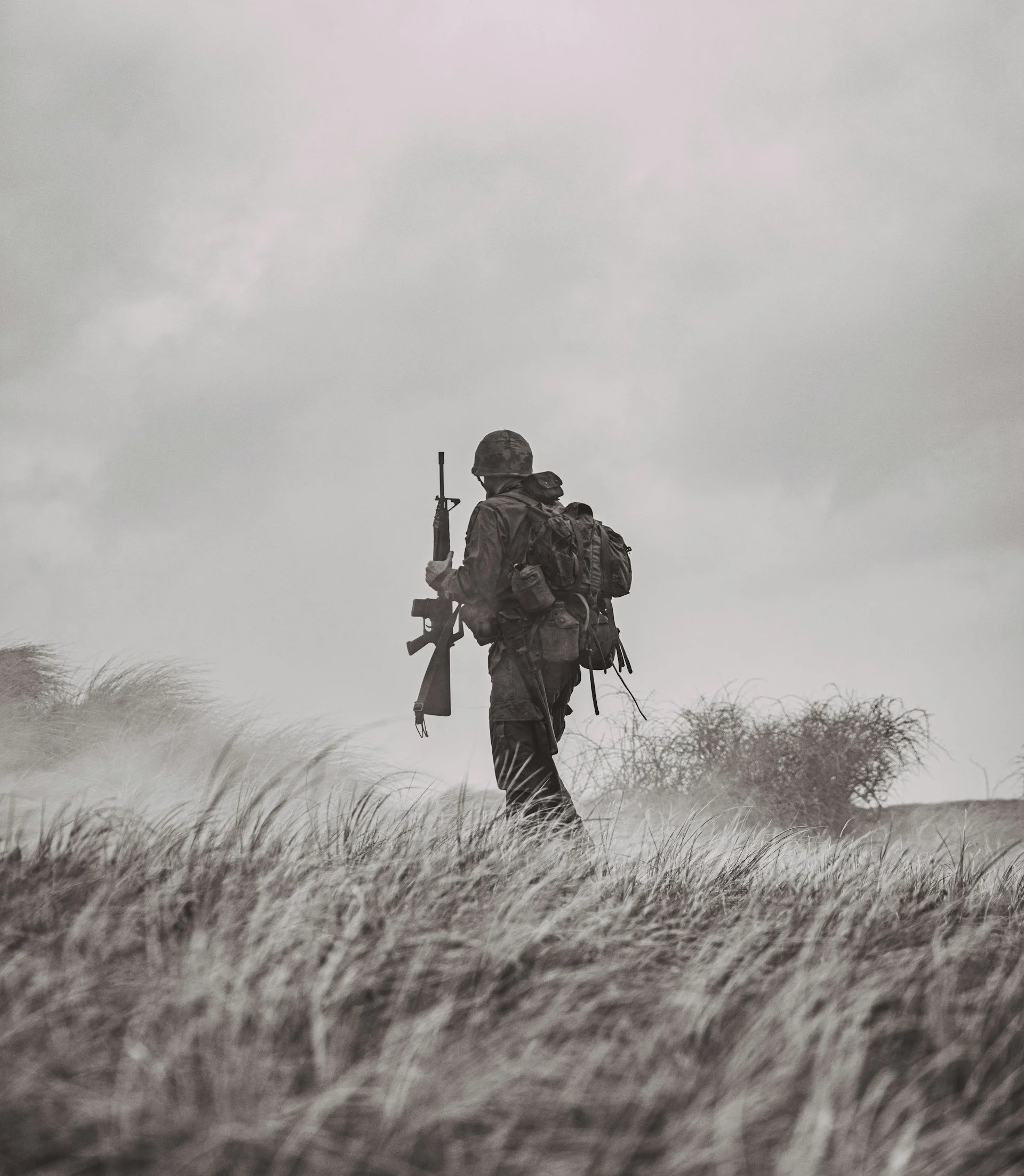
A month ago, hundreds of the nation’s top-ranking US military leaders were summoned from across the globe to Quantico, Va. To their relief — or frustration, depending on who you ask — there was no emergency. Just Pete Hegseth, the United States Secretary of Defense, delivering a speech on what he calls “warrior ethos” and criticizing what he calls the “woke military,” citing LGBTQ+ inclusivity.
“[The military under the Biden administration] had to put out dizzying DEI and LGBTQ+ statements,” Hegseth said. “We were told females and males were the same thing, or that males who think they’re females — totally normal.”
Contrary to Hegseth’s speech, however, the presence of queer people in the military is not a new-age concept. It’s their permission to serve without shame that’s modern. Hegseth’s remarks echo a familiar pattern — each generation claiming that queer soldiers are new, only for history to prove otherwise.
From a woman being discharged for a love letter to the veterans rebuilding their inclusion today, the Central Mass community has long been home to soldiers who served bravely — and quietly — in every era.
The Hidden War
During the Cold War, Gloria Audet (a Worcester woman who would later be among the first gay people in Worcester County to get legally married) first discovered her sexuality, and then discovered that she was “the person that everybody hated and was afraid of,” as she put it during a 2018 interview with the Worcester Historical Museum. For that reason, she briefly joined a convent before being discharged for confessing to being a lesbian.
So she joined the Marines — another uncertain environment for a closeted lesbian in 1955.
Audet didn’t last long there either, because to her surprise, officers had the authority to open marines’ mail before it reached them. And when they did, they found a letter from a woman Audet was dating at the time and discharged her under honorable conditions.
Usually being ousted from the military for being queer meant a dishonorable discharge, but Audet thought she was lucky that there was no evidence outside the mailbox and barely enough evidence within it.
“They said that I couldn’t be in the platoon anymore, so they segregated me with [about six or seven] other women that had been found out. Other gay women,” Audet told the Historical Museum. “And after about three weeks, they sent me home.”
It was the McCarthy era, where the experience of being interrogated about what happens in the bedroom wasn’t uncommon. Audet and her colleagues were often asked to provide names of service members they knew to be gay, and had to keep their heads down when running into them in public.
Back home, a conservative, Catholic city with deep ties to military service awaited. In postwar Worcester, patriotism and silence often went hand-in-hand.
Cracks in the Closet
In 1969, 17-year-old Army private Allan Lewis officially cited anti-Semitism as his reason for his long and unauthorized absence at the start of the year. After successfully crossing the Canadian border, however, he wrote a confession to The Worcester Evening Gazette (now the Telegram & Gazette) about his real reason for fleeing — an announcement made by his sergeant, proclaiming three things he detested: “Communists, homosexuals and Jews.”
In his letter, Lewis shared specifics about his plan to return 9 months later, down to the exact date and time. These details would’ve remained true had he not arrived three hours early in an attempt to evade law enforcement — an attempt military police had unfortunately prepared for, arriving even earlier than he.
“There’s only one reason I’m letting the Army do this to me,” Lewis wrote. “Not because they’re right and I’m wrong, but because I want to see some of the world and I wouldn’t be able to come back to the United States to see my family and friends without having to look over my shoulder.”
Because of people like Audet and Lewis, the Worcester Catholic Diocese published an unexpected request, calling for an understanding toward gay people. It was very progressive for 1974 — especially in a religious and veteran-heavy region like Worcester.
The following year, two women in Central Mass. — Deborah “Debbie” Watson and Barbara Randolph — made history being among the first female service members to come out as lesbians. Of course they were swiftly discharged from Fort Devens, but that’s besides the point.
Their discharges became a local precursor to national activism — with Central Mass. quietly intersecting with the wider movement. And contrary to the narratives that enveloped queerness throughout the 20th century, LGBTQ+ soldiers in the region stepped into visibility, even when it cost them everything.
The Era of Compromise
In 1992, Clinton ran for president on his “Don’t Ask, Don’t Tell” campaign, which would prove to be a sort of compromise — allowing queer people to legally serve in the military without doing much to combat the actual prejudice against them.
The policy — if only symbolic — protected queer service members’ right to their privacy. Beforehand, they existed fearful of investigations leading to their ousting or even arrest.
Richard Buchanan, a Korean War veteran, Athol local and the co-president of the New England chapter of Gay, Lesbian and Bisexual Vets didn’t come out in the service.
“That would have been pretty dangerous in the’50s,” he told the Telegram & Gazette in 1992. “And it had been pounded into us that you’d get a dishonorable discharge. I had to hide it, and they still have to hide it.”
His fears were warranted. A Worcester County reservist, a lesbian who served in Desert Storm shared his sentiment — and withheld her name.
“You have to watch your back all the time,” she told the Telegram & Gazette in 1992. “You’re very careful who knows. There’s almost a sixth sense. You talk to people and you listen to the way they word things, and you can sense who you can tell.”
The reservist was once confronted about her sexuality before going off to Desert Storm.
“If you admit it, you’re out. If you deny, it’s a denial of who you are,” she said. “I had to say no, and it was terribly hard for me.”
And while “Don’t Ask, Don’t Tell” was progress, it wasn’t change. Gary Lehring was a professor at Clark University during the Clinton administration. It’s also worth noting that he was openly gay and even though he didn’t serve himself, he wrote his dissertation on gays in the military.
In response to the policy officially passing, Lehring told the Telegram & Gazette in 1993 that if Clinton had applied it across the board, straight men in the military wouldn’t be allowed to openly discuss their wives or girlfriends.
“They could not have a picture of their wife or girlfriend on their desk. That would be grounds for dismissal,” he said. “That, of course, would be absurd. But that is what is being forced on gays in the military.”
Throughout history, Worcester can be extracted from the national record — still mirroring it as a microcosm of the national moral paradox itself: compassion without full equality.
The Quiet Revolution
Today, Worcester is among the first sanctuary cities in the country for transgender and gender-diverse people, developing its first LGBTQ+ Affairs Commission and is the birthplace for the expanding Project New Hope Inc., which empowers military-connected individuals through compassionate care.
Even though there’s more work to be done, Worcester’s gay soldiers — once surveilled and silenced — are now supported openly in their own city. Where papers once reported discharges, they now promote inclusion — and healing.
Central Mass is indeed religious, patriotic, pro-military — and proof that service members of every identity can have pride in more ways than one. And despite how Pete Hegseth expects “warrior ethos” to look, or however “dizzying” LGBTQ+ statements are for him, the military has always been “woke,” it just had to be kept a secret.